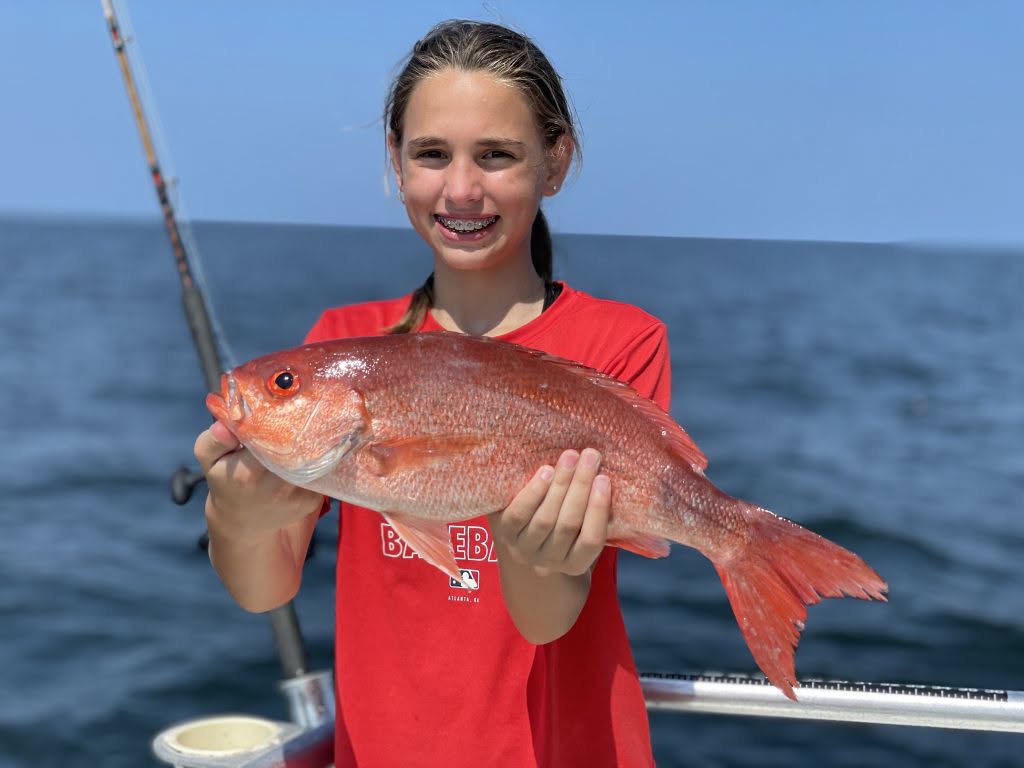
Red snapper and grouper may get most of the attention on a Gulf reef trip, but they are not the only fish capable of making the day. Gray triggerfish and vermilion snapper—widely called beeliners—often gather around the same reefs and wrecks. When the larger targets are slow, a deliberate change in tackle and presentation can produce steady action instead of repeated empty drops.
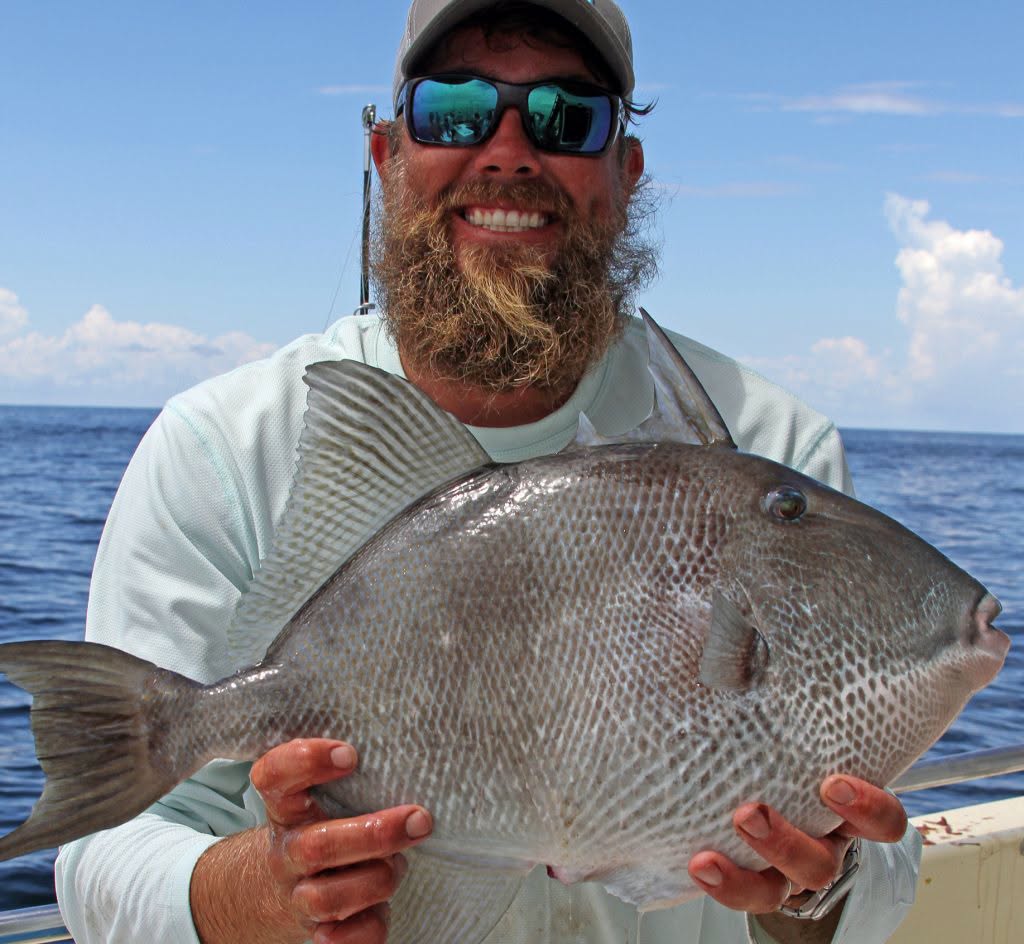
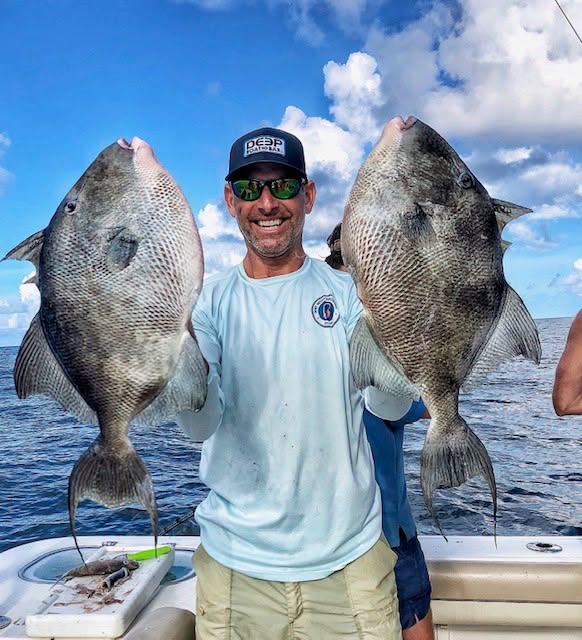
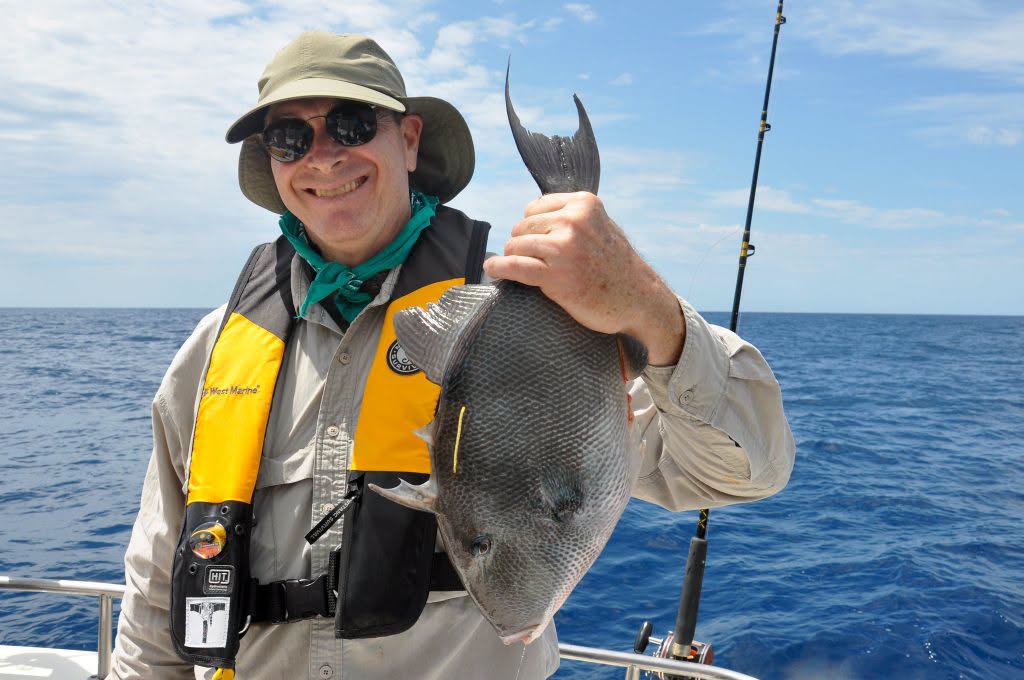
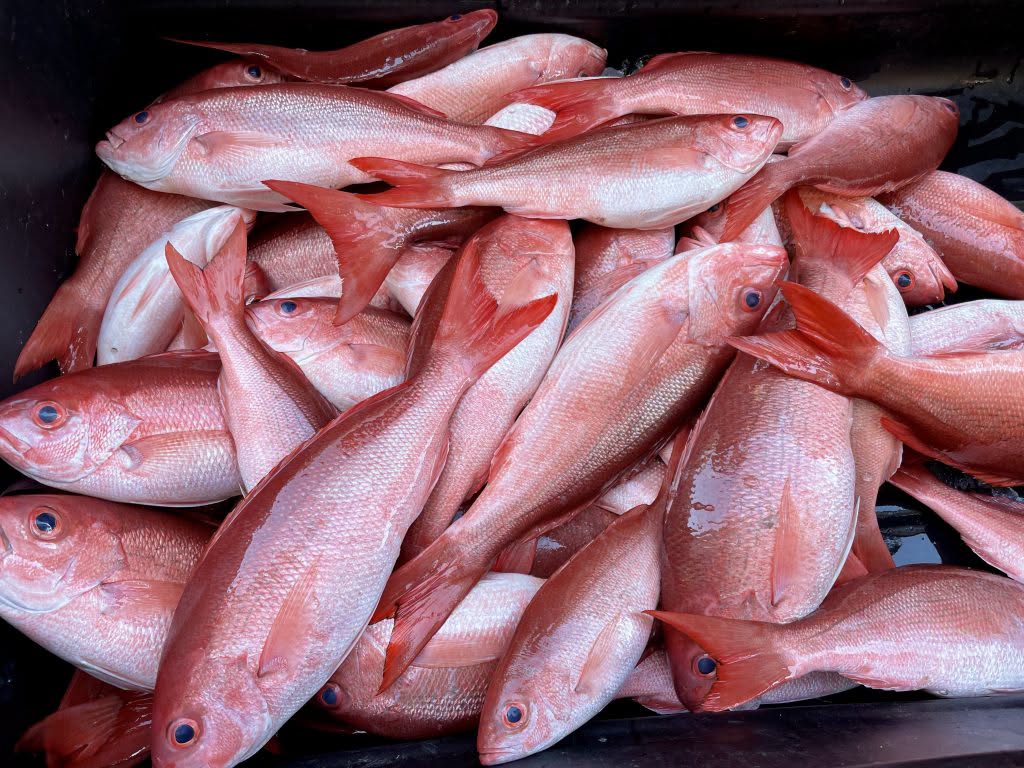
The two species feed differently enough that identification and rigging matter. A gray triggerfish has a deep, compressed body, a small mouth equipped with powerful teeth and a distinctive locking dorsal spine. It feeds heavily on crabs, shrimp, urchins, mollusks and other hard-shelled prey. A beeliner is a smaller, streamlined snapper with a reddish body and pale yellow-gold lines. Beeliners commonly form schools above and around reef structure rather than holding directly on the bottom.
Boat position is often the first adjustment. Current can push beeliners to the down-current side of a reef, and many fish may suspend well above the structure. After the weight reaches bottom, reel the rig several feet upward and work the water column. That approach reduces snags and can put the bait directly in front of feeding fish. When a school rises in response to chum, light spinning tackle and a slowly sinking bait can make the fishing especially visual and approachable for younger anglers.
Downsized terminal tackle helps with both species. The source post recommends small circle hooks—roughly size 1 through 2/0—for the compact mouth of a triggerfish, along with lighter main line, a fluorocarbon leader and only enough weight to reach the target depth. A two-hook chicken rig is useful when beeliners are suspended, while a light knocker or sliding-sinker rig keeps a single bait compact. Whatever the configuration, match the weight to current and depth rather than automatically reaching for the heaviest reef rig aboard.
Fresh squid strips are a dependable starting bait because they present a strong scent and stay on the hook better than many soft offerings. Bonito belly, cut cigar minnows, sardines, LYs and pinfish can also produce. A durable synthetic bait strip can be added after the natural bait to help keep something scented on the hook when small fish are stealing bait in deep water. Check the bait often; a bare hook at 100 feet wastes much more time than a quick inspection at the surface.
Circle-hook technique is simple but important: do not make a hard hook-set. Tighten the line smoothly as the rod begins to load, then reel until the hook rotates into the corner of the fish's jaw. Non-stainless circle hooks are required when fishing for Gulf reef fish with natural bait. Keep a dehooker, measuring device and release tools ready before the first drop so undersized fish can be handled promptly.
As of September 2026, Outdoor Alabama lists a 15-inch fork-length minimum and a one-fish daily limit for gray triggerfish. Alabama state waters are open when federal waters are open, with annual closures in January and February and again in June and July. Gray triggerfish harvest must be reported through Snapper Check. Vermilion snapper have a 10-inch total-length minimum and a daily limit of 10 fish per person. Anglers age 16 and older who possess, take or attempt to take listed Gulf reef fish also need Alabama's Saltwater Reef Fish Endorsement. Regulations can change, so verify the official state season, size and creel pages on the day of the trip.
Triggerfish require extra care at the cleaning table because the hide is extremely tough. A sharp, relatively stiff fillet knife is essential. The source recommends entering behind the dorsal fin along the backbone and cutting upward through the skin before completing the normal fillet cuts. Keep hands clear of the fish's teeth and dorsal spine, stabilize the fish before cutting and sharpen the knife before forcing it. Both triggerfish and beeliners yield mild, fine-grained white fillets that work well with simple preparations.
Source credit: This article was developed from the fishing guidance and photographs in ‘How To Catch Triggerfish And Beeliner,’ shared by the Alabama Saltwater Fishing Podcast by Great Days Outdoors. The original Facebook post is linked below. Current regulation details were independently checked against Outdoor Alabama before publication.