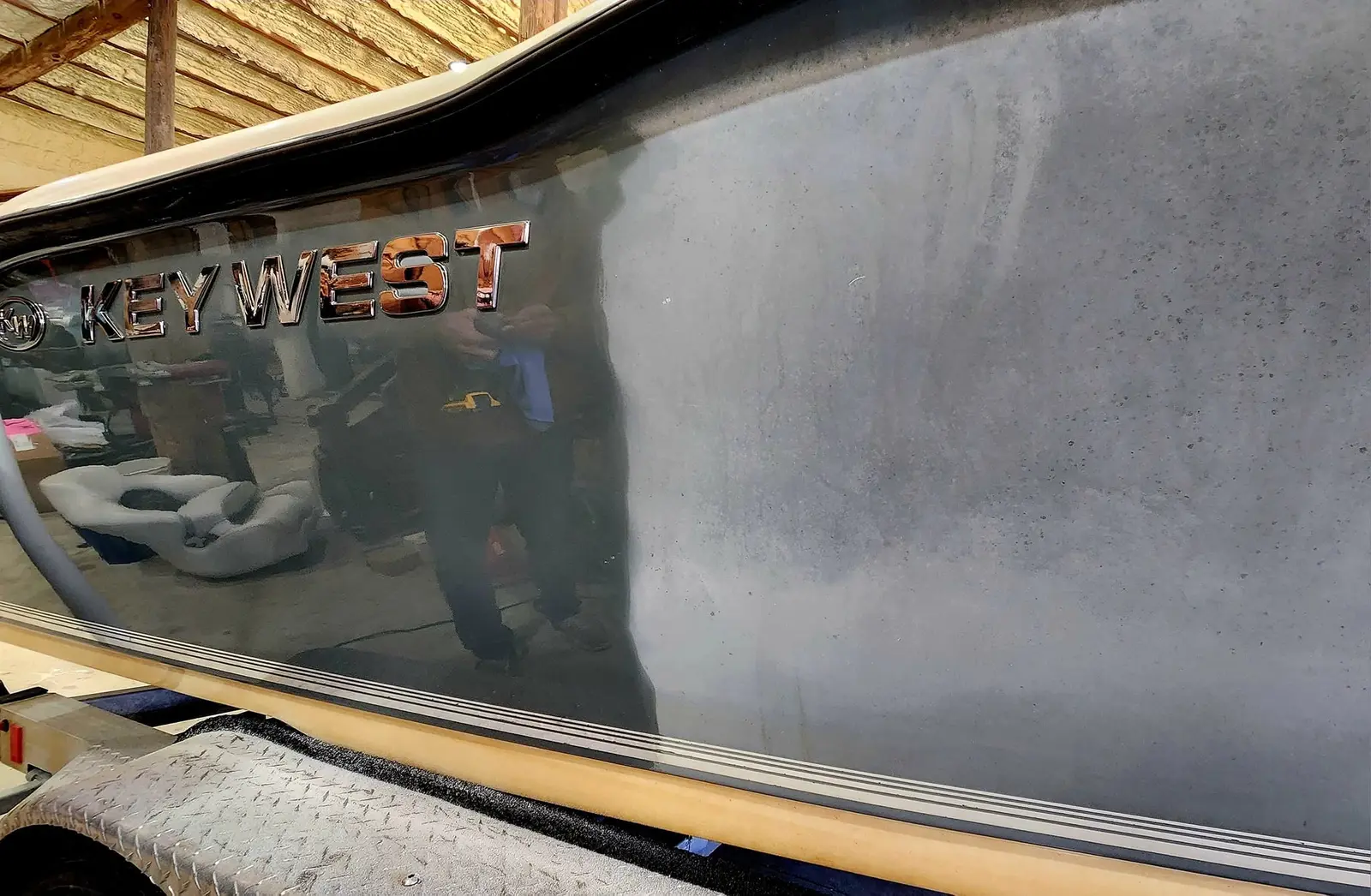
Fiberglass and gelcoat problems can look similar from a distance, but they do not all call for the same repair. A hull that has lost its shine may only need controlled surface restoration. A deep gouge may require new gelcoat and careful color blending. An impact or failed structure can require the damaged laminate to be opened, rebuilt and refinished. The best result begins with identifying which layer has actually failed instead of treating every blemish as a polishing job.
For a chalky but otherwise sound hull, the first step is to evaluate how deeply ultraviolet exposure and oxidation have affected the gelcoat. A measured cut-and-buff process can remove the dead surface, refine the finish and bring back gloss without unnecessary sanding. The Key West hull shown here illustrates why a small test area is useful: it reveals how much color and reflection remain before the entire boat is treated.
When fading or oxidation extends beyond what compounding can correct evenly, wet sanding may be the appropriate next step. The process uses progressively finer abrasives to level the damaged surface before polishing restores clarity and shine. Edges, corners, graphics and previously repaired areas require particular care because gelcoat thickness is not unlimited. Once the finish is restored, regular washing and UV protection help preserve the improvement.
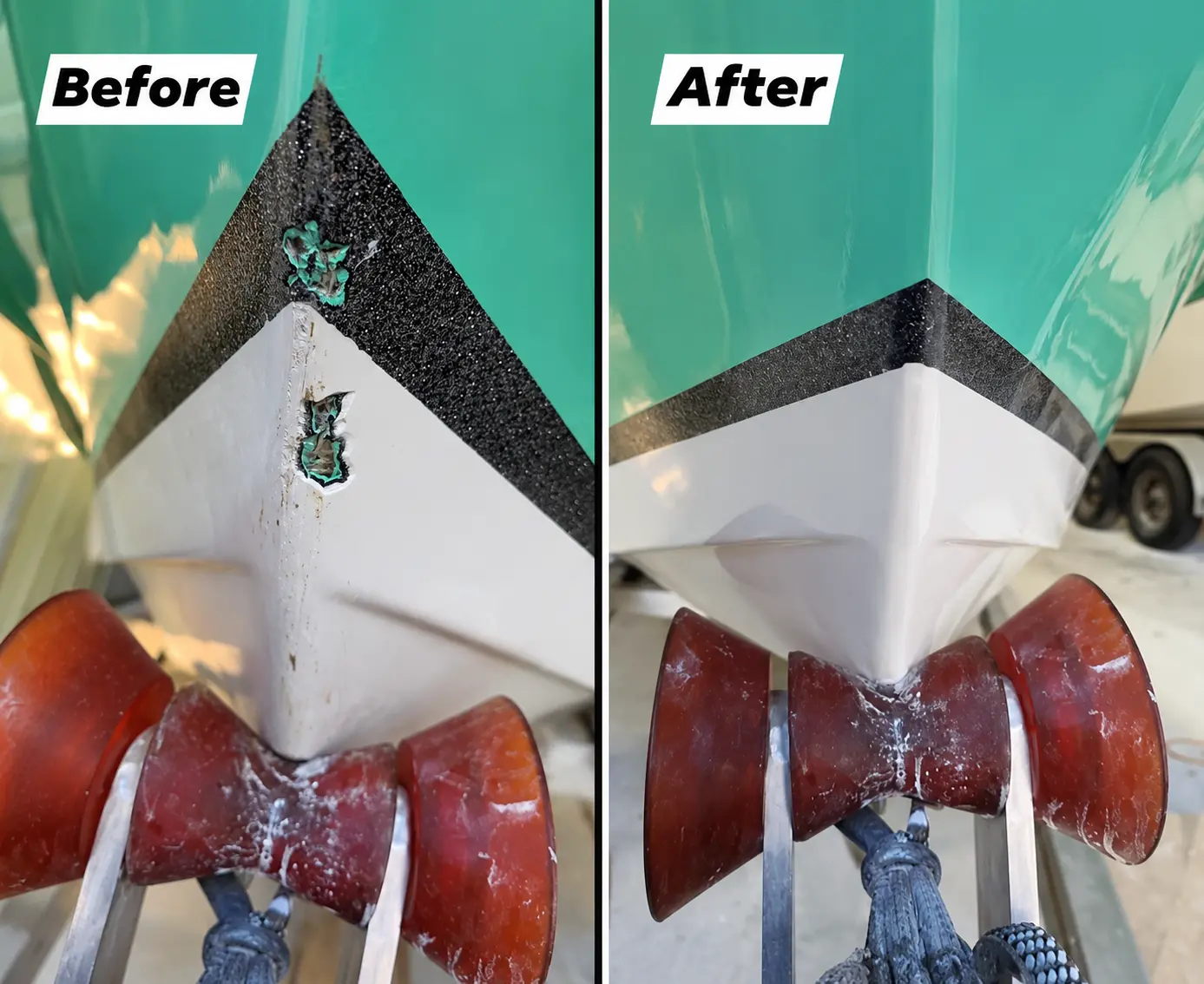
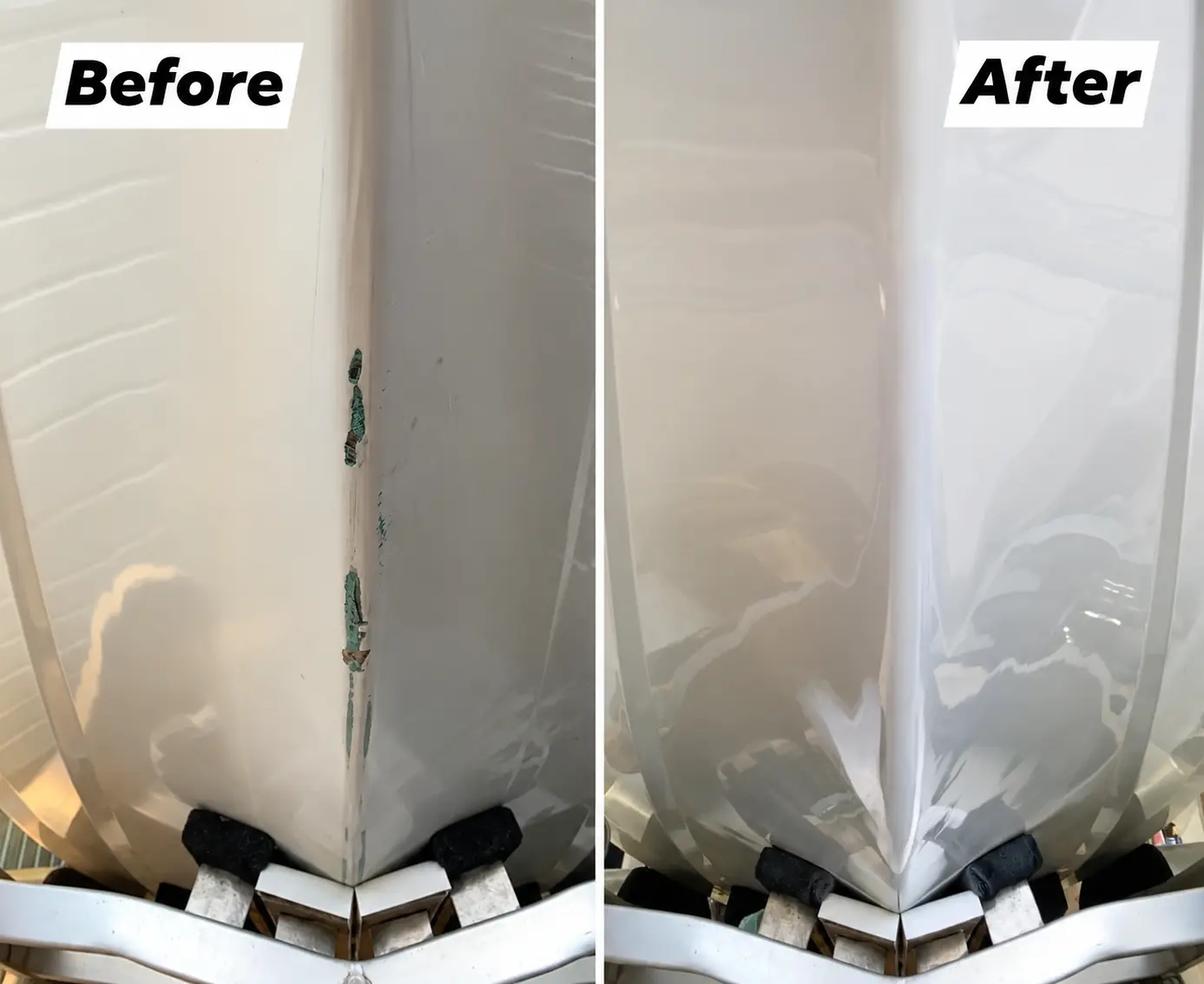
Chips, gouges and worn keel areas require more than shine. Damaged material must be removed until the remaining surface is sound, and any exposed fiberglass must be sealed and rebuilt as needed. The area is then faired to the original shape, matched with compatible gelcoat and carefully finished so the transition follows the surrounding hull. Accurate shaping matters as much as color, especially along a keel, chine or sharp bow feature where the eye quickly catches an uneven line.
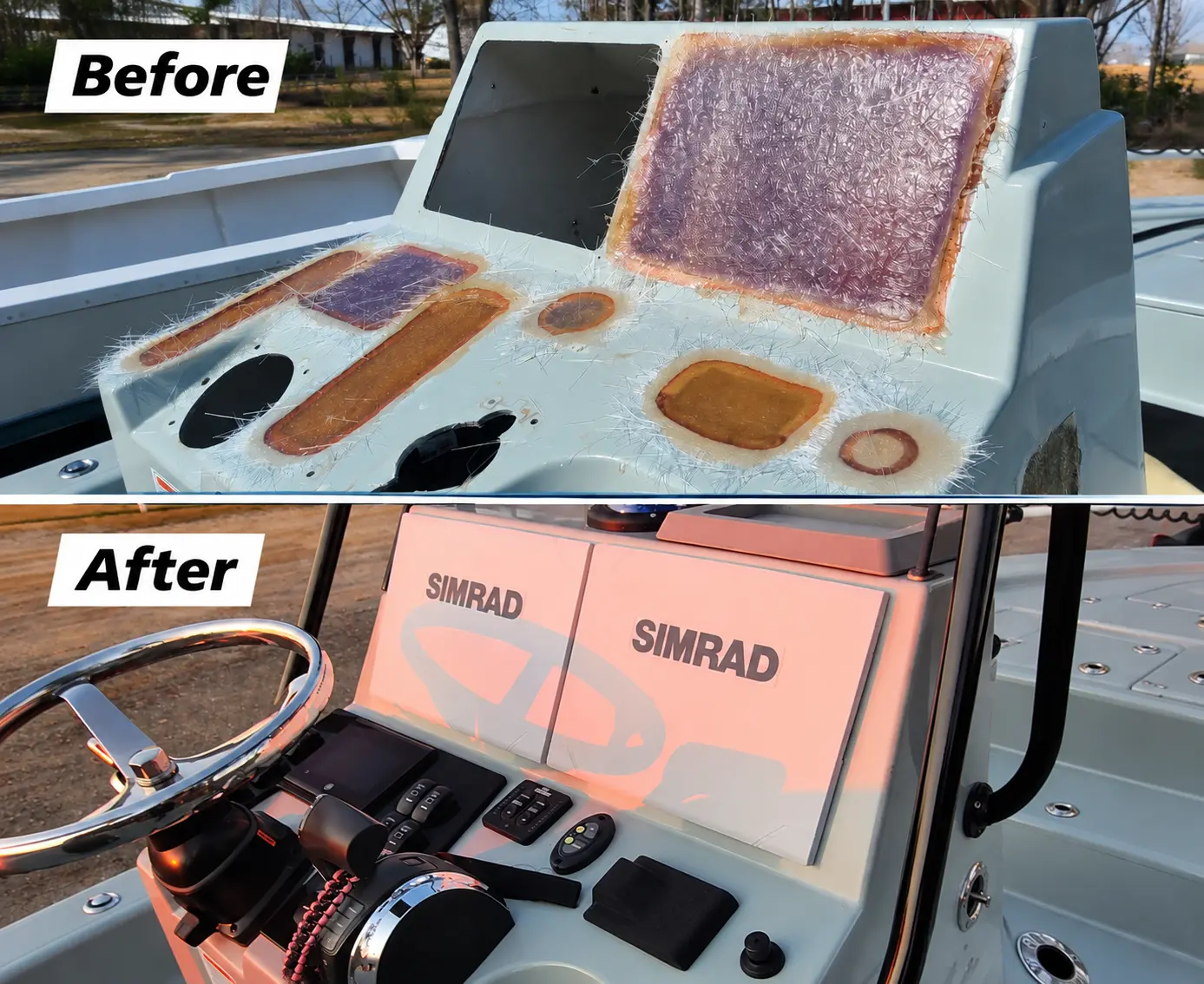
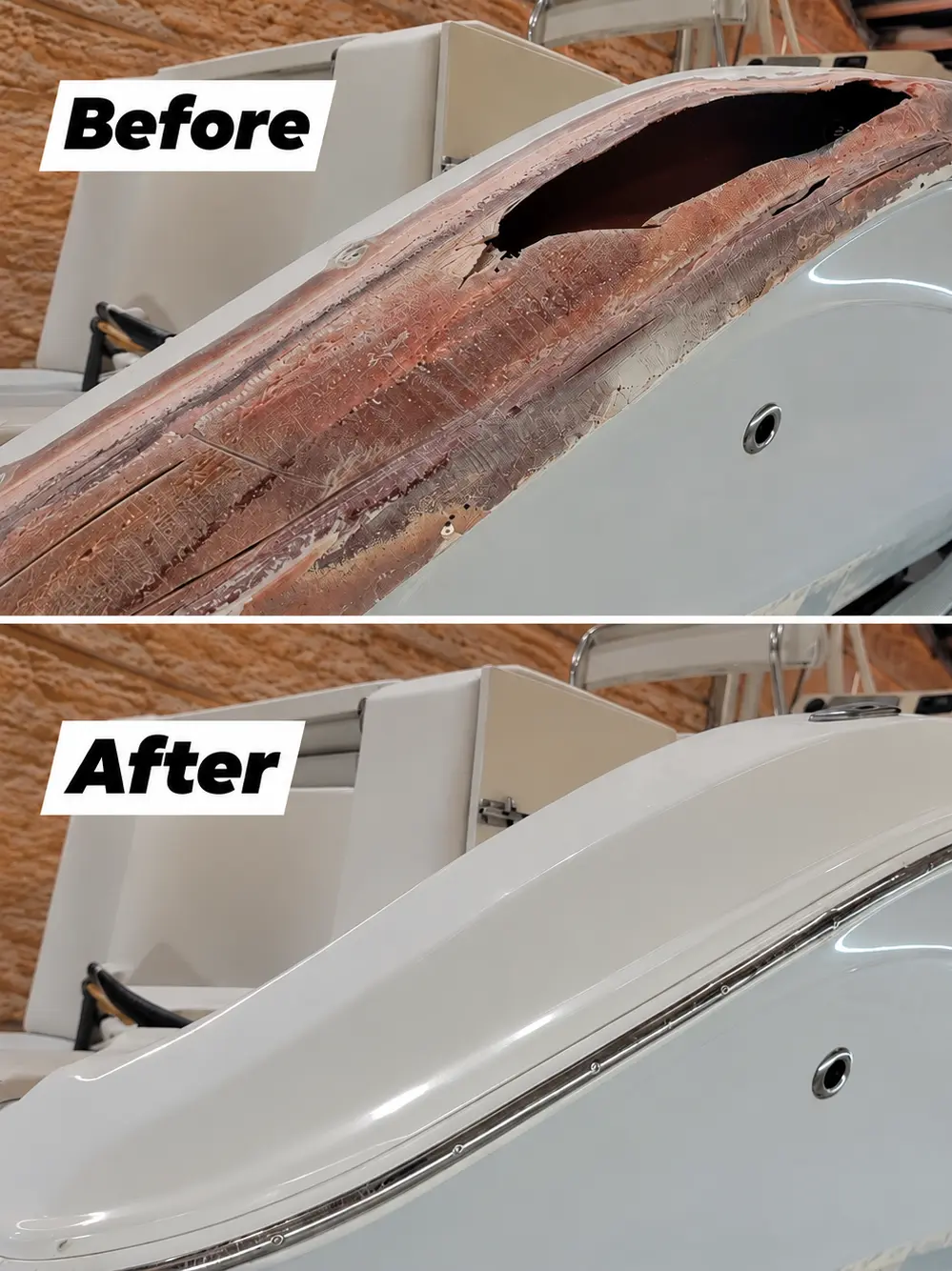
More extensive damage changes the scope completely. The gunwale repair shown in the gallery was opened far enough to expose the affected laminate rather than hiding it beneath filler. Rebuilding the fiberglass structure, fairing the contour and recreating the finished surface takes time, but that sequence is what allows the repair to restore both strength and appearance. The console project shows the same principle on a larger scale: a complete retrofit can combine fiberglass reconstruction, revised mounting surfaces, refinishing and the installation of updated controls and electronics.
Make Wake Marine's fiberglass and gelcoat repair technician brings more than 35 years of experience to this work. That experience is especially valuable when deciding how far a repair must go—and when a less invasive restoration is enough. The objective is not to prescribe the biggest job. It is to match the process to the boat's actual condition, from cut-and-buff correction and wet sanding to localized repair or a complete retrofit.
An in-person inspection is the most dependable way to set the scope. Lighting, moisture, previous repairs and the location of the damage can change what is visible in a photograph. Owners can help by sharing when the problem first appeared, whether it followed an impact and whether the boat has been stored in the water. That history, combined with a close inspection, provides a much better foundation for an accurate repair plan.